 0116 264 5115
 Looking for electrical work? Find Out More
What is Usually the Most Common Water Heater Problem?
In many homes, the most common water heater problem is poor hot water performance. That usually means water taking too long to heat, running out too quickly, or not getting as hot as it should. Regular hot water cylinders service in Leicester can help spot the cause early, whether that is scale, a faulty thermostat, or a worn heating element. In England, hot water systems must meet the safety requirements set out in Approved Document G.
This kind of issue often builds up gradually rather than appearing all at once. A system may still produce hot water, but less efficiently and less reliably than before. That is why small changes in performance are often the first clue that something needs attention.
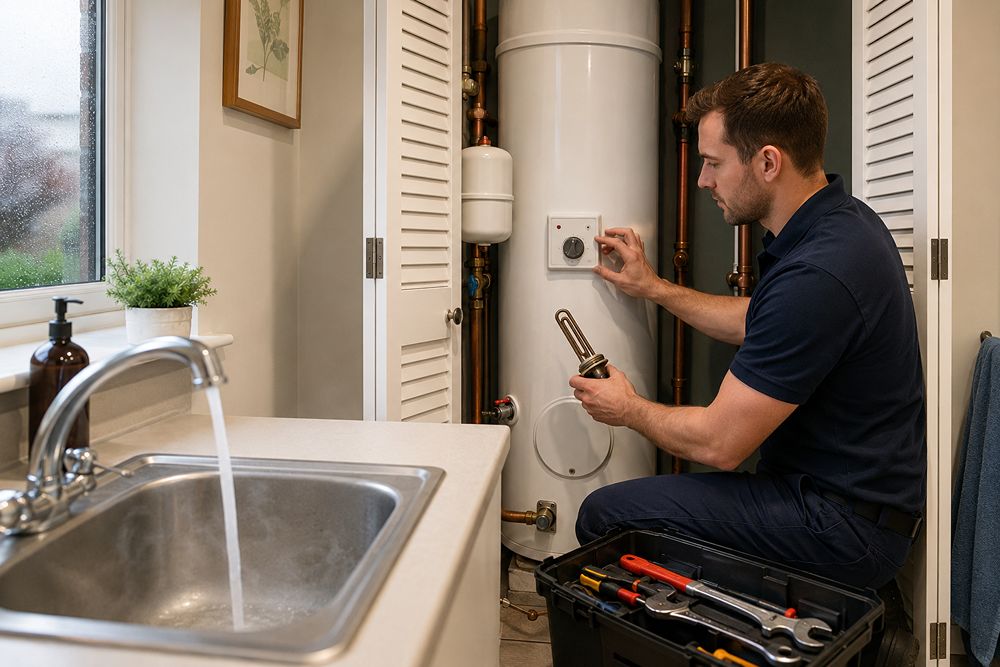
Why is poor hot water performance so common?
The usual reason is wear over time. Heating controls, thermostats, immersion elements, and safety components all have to work together properly. When one part starts to struggle, the first thing most homeowners notice is that the hot water no longer feels consistent.
Limescale can also play a big part, especially in harder water areas. Which? notes that limescale prevention is worth considering in hard-water homes because scale can affect heating efficiency and long-term performance.
What signs should you look for?
The early signs are usually practical ones. Water may take longer to heat, the supply may not last as long, or the cylinder may seem slower to recover after use.
You might also notice higher running costs, inconsistent water temperature, or unusual sounds when the system is heating. If you want to reduce the chance of those problems building up, How to Maintain Your Hot Water Cylinder for Long-Term Efficiency? is a useful related read.
What if the cylinder is making noises?
Noise should not always be dismissed as harmless. Rumbling, banging, or other unusual sounds can point to scale, overheating, or a heating system issue nearby.
If the noise seems to be coming from the wider system rather than the cylinder alone, what are the reasons for banging noises in my boiler? can help explain what may be happening. HSE guidance also notes that hot water should be stored at 60°C and monitored properly as part of good system control.
Can it usually be repaired?
In many cases, yes. If the main cylinder body is still sound, problems linked to controls, thermostats, or immersion heaters can often be resolved without changing the full unit.
That is where hot water cylinders repair may be the right next step. The key question is whether the fault is limited to replaceable parts or whether the cylinder itself is starting to fail.
When does replacement become more likely?
Replacement becomes more likely when the cylinder is older, leaking, losing heat too quickly, or repeatedly developing faults. At that stage, repair may only offer a short-term answer.
That is often when people begin weighing up hot water cylinders replacement instead of another repair. If age is part of the issue, how long does a hot water cylinder typically last? fits naturally here because lifespan often shapes the decision.
Are there safety or legal points to know?
Yes. Approved Document G supports the Building Regulations for sanitation, hot water safety, and water efficiency in England. Government guidance also makes clear that the hot water safety regime applies to all types of hot water system, not only unvented ones.
For stored hot water systems, good temperature control matters too. HSE guidance says hot water should be stored at at least 60°C, and hot water should reach at least 50°C within one minute at outlets used for monitoring.
That is one reason hot water cylinders installation should always be handled properly, with the right level of skill and attention to current standards.
So what is the most common problem in simple terms?
In simple terms, it is usually a gradual loss of heating efficiency. The water heater still works, but not as well as it used to. That is what most homeowners notice first.
The good news is that this does not always mean full replacement. Sometimes the answer is servicing. Sometimes it is a repair. The important thing is to act before the problem turns into a leak, complete loss of hot water, or a more expensive fault.
Conclusion
The most common water heater problem is usually poor hot water performance caused by wear, scale, or a fault in one of the working parts. If your system is slower, noisier, or less reliable than it used to be, it is worth getting it checked before the issue becomes more disruptive.
If your cylinder needs attention, East Goscote Plumbers offers experienced support backed by 50 years in the trade. Contact the team today to arrange a professional inspection and get expert advice on servicing, repair, or replacement for your hot water system.