
 0116 264 5115
 Looking for electrical work? Find Out More
What Happens During an Air Source Heat Pump Service?
An air source heat pump service is a detailed check of the outdoor unit, heating controls, electrical connections and the wider system inside your home. Booking a regular heat pump service in Leicester can help identify wear, restricted airflow or performance issues before they cause a breakdown.
Energy Saving Trust recommends servicing a heat pump in line with the manufacturer’s guidance, which is usually once a year. Annual servicing may also be required to maintain the manufacturer’s warranty.
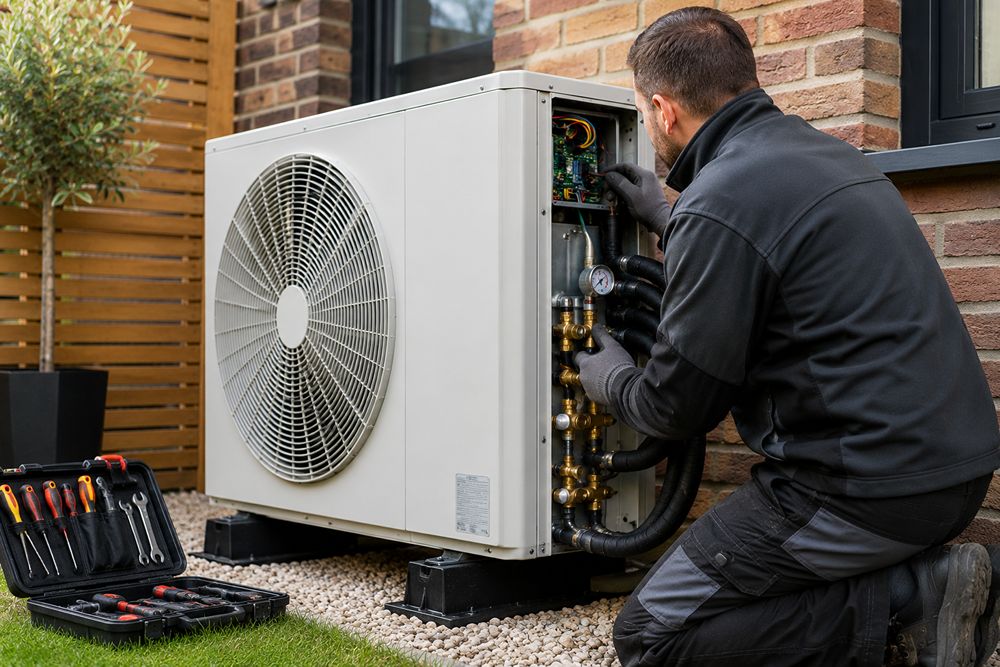
The engineer reviews the system’s recent performance
A service will usually begin with a conversation about how the heat pump has been operating. The engineer may ask whether rooms are taking longer to warm, energy use has changed or the system has displayed any warning codes.
This information can help identify intermittent problems that may not be obvious during a visual inspection.
The outdoor unit is inspected
The outdoor unit needs clear airflow to absorb heat from the surrounding air. Leaves, dirt, overgrown plants, bins and other obstructions can reduce performance.
During the service, the engineer may inspect and clean the coil, fan blades and air inlets. Energy Saving Trust advises keeping the outdoor unit free from obstructions because good air circulation supports efficiency and can reduce running costs.
The engineer will also look for signs of damage, corrosion or unusual vibration around the casing and fan.
Filters and system components are checked
Depending on the system design, the heat pump may contain strainers or filters that protect the internal components from dirt and debris.
These parts may be inspected and cleaned where necessary. Restricted flow can make the heat pump work harder and may affect how evenly heat reaches radiators or underfloor heating.
Refrigerant levels and pressure may be assessed
Refrigerant allows the heat pump to transfer heat from outside into the home. If the refrigerant level or pressure is incorrect, heating performance may fall and the system may use more electricity.
Where the service involves work on equipment containing fluorinated greenhouse gas, the technician must hold the correct F-gas qualification. UK government guidance states that it is against the law to work with F gas without the appropriate certification.
The engineer may also check for signs of leakage and investigate any unexplained drop in performance.
Electrical connections and safety controls are tested
An air source heat pump relies on electrical components, sensors and controls. Loose wiring or a failing connection can cause intermittent operation or prevent the system from working safely.
A service may include checking electrical connections, testing safety devices and confirming that the system starts, runs and shuts down correctly. Energy Saving Trust lists safe electrical connections among the areas commonly reviewed during heat pump maintenance.
Heating controls and settings are reviewed
Heat pumps usually work best when they run steadily at lower flow temperatures rather than switching on and off in short bursts. The engineer may review the thermostat, timers, weather compensation and heating curve.
Incorrect settings can leave rooms uncomfortable or increase electricity use. The service gives the engineer an opportunity to adjust controls and explain how to operate the system more efficiently.
Water pressure and circulation are checked
For an air-to-water heat pump, the engineer may examine system pressure, pumps, valves and water circulation. Poor circulation can reduce heating performance and create uneven temperatures across the property.
Any visible pipework may also be checked for leaks, corrosion or damaged insulation. Small issues in these areas can affect the performance of the entire heating system.
What happens if the heat pump also heats a cylinder?
Many air source heat pumps provide both space heating and stored hot water. Where a cylinder is connected, the engineer may check temperature controls, sensors, valves and the hot water schedule.
The age and condition of the cylinder can affect how well the wider system performs. How long does a hot water cylinder typically last? explains which factors influence its working lifespan.
The service may also confirm that any scheduled anti-legionella cycle is set correctly. Energy Saving Trust recommends asking about this cycle when taking over a property with an existing heat pump.
Are hot water temperatures checked?
Where stored hot water forms part of the system, temperature control is an important consideration. HSE guidance says stored hot water should generally reach at least 60°C as part of controlling legionella risk in relevant systems.
Heat pumps often heat water differently from a traditional boiler, so the engineer may check how the cylinder and any immersion heater work together to reach the required temperature.
Regular cylinder care can also reduce heat loss and help prevent avoidable faults. How to maintain your hot water cylinder for long-term efficiency? covers the routine checks that support reliable hot water performance.
Will the engineer explain any faults found?
Once the inspection is complete, the engineer should explain the system’s condition and identify anything that needs attention.
This may include minor maintenance, a setting adjustment or a recommendation for repair. You should also be told whether the issue needs immediate action or can be planned for a later date.
If your hot water has already become slower, cooler or less reliable, What is usually the most common water heater problem? may help you recognise whether the cylinder side of the system is contributing to the problem.
How long does a heat pump service take?
The time required depends on the heat pump model, its accessibility and whether any faults are found. A straightforward annual check may be completed in one visit, while further investigation or replacement parts can extend the work.
Before the engineer leaves, ask for a service record and keep it with the system documents. This can support future fault diagnosis and may be important for warranty purposes.
Conclusion
A professional service is an opportunity to assess the whole heating system rather than simply cleaning the outdoor unit. Airflow, refrigerant, controls, electrical parts, water circulation and hot water performance all need to work together.
For dependable heat pump support backed by 50 years of heating experience, speak with East Goscote Plumbers. Arrange your service before the main heating season to give the system the best chance of running reliably when colder weather arrives.