 0116 264 5115
 Looking for electrical work? Find Out More
How Often Should You Check Your Plumbing System at Home?
Most homeowners do not think about their plumbing until something starts leaking, dripping, or blocking up. That is understandable, but small issues often start long before they become obvious.
There is no rule that says you must inspect your plumbing system every month. Still, regular checks are one of the easiest ways to spot problems early and avoid bigger disruption later.
In England, plumbing work and water fittings must comply with the water supply (water fittings) Regulations 1999. These rules are in place to help prevent contamination and unnecessary waste of water.
A practical routine for most homes is a quick monthly check, followed by a more careful look every few months. That is usually enough to catch the most common household issues before they worsen.
What is a sensible checking routine?
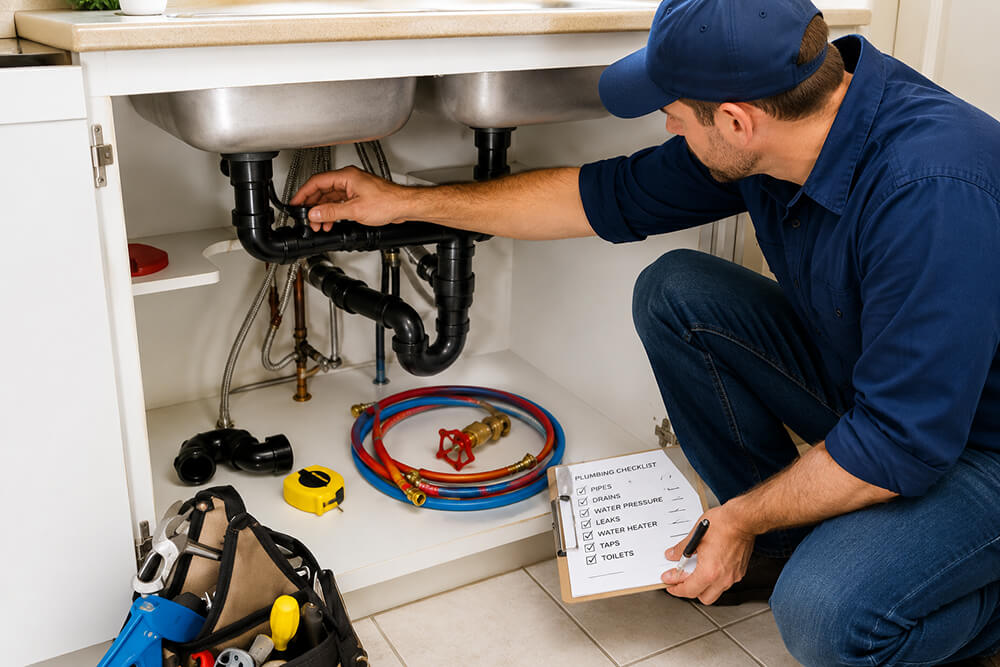
A quick check once a month works well for most homes. This is usually enough time to notice changes such as a dripping tap, reduced pressure, or damp marks under a sink.
Every three months, it helps to be a bit more thorough. You can look at visible pipework, valves, radiators, appliance connections, and any areas where water damage might be starting to show.
It is also worth checking your system before winter and again once winter has passed. Water company guidance warns that cold weather can create problems for internal pipework, especially where insulation is poor.
What should you look at during a home check?
Start with the areas you use every day. Taps, toilets, sinks, and visible pipework are often the first places to show signs of trouble.
Look for drips, stains, rust, swelling around joints, or any musty smell that suggests hidden moisture. A small leak today can turn into a much larger plumbing repair if it goes unnoticed.
Toilets are especially worth checking. Water supplier guidance says they are one of the most common places for hidden leaks in the home.
You can also read What Are the Most Common Plumbing Problems in Leicester? if you want a clearer idea of what tends to go wrong in local homes.
Why is regular checking important?
Plumbing problems do not always arrive dramatically. Many begin with a very minor sign, such as a slow drip, a toilet that keeps running, or a slight drop in pressure.
Left alone, even a small issue can waste water and lead to property damage. Thames Water says leaking toilets can waste significant amounts of water each day, even when the problem seems minor.
That is why regular checks matter. They help you stay ahead of issues before you need urgent work or more expensive solutions.
Are there any legal points to know?
Yes. If work is carried out on your home’s water system, it must meet the Water Supply (Water Fittings) Regulations 1999.
The drinking water Inspectorate says owners, occupiers, and anyone carrying out plumbing work have a legal duty to make sure it complies. For some major work, your water supplier may also need to be notified.
This is one reason why homeowners often choose qualified professionals for larger plumbing installations rather than trying to manage complex work themselves.
WaterSafe also says that using an approved plumber helps make sure work is done safely and legally, while protecting drinking water quality.
What if you rent your home?
If you are renting, plumbing responsibilities are not always yours. GOV.UK says landlords are generally responsible for repairs to sinks, basins, baths, pipes, drains, heating, and hot water systems.
That means if you notice a leak or defect, reporting it early is usually the right step. Tenants should not take on repairs that belong to the landlord unless the tenancy agreement allows it.
How do you check for a hidden leak?
A water meter can be a useful clue. UK water suppliers often recommend turning off all taps and water-using appliances, taking a meter reading, waiting, and then checking whether the reading has changed.
If it has moved, there may be a hidden leak somewhere on the property. This can be a useful early sign that it is time to arrange a plumbing service.
For more detail, how can i find a hidden water leak in my home? is a strong internal resource to include.
When should you call a professional?
You should get help if leaks keep returning, pressure drops suddenly, stains keep spreading, or pipework starts making unusual noises.
It is also sensible to call a professional before changing bathrooms, kitchens, or major water connections. Bigger jobs often need more than a basic fix, especially where compliance and long-term performance matter.
If cost is part of the decision, How much does plumbing cost? can support the reader naturally here.
Final thoughts
Checking your plumbing system at home does not need to be complicated. A quick look every month and a more detailed review every few months can make a real difference.
That small habit can help you spot early warning signs, reduce water waste, and avoid larger problems later on.
If you need help with plumbing service, plumbing repair, or plumbing installations, East Goscote Plumbers offers trusted support backed by 50 years of experience. Contact us to discuss the next step for your home.