 0116 264 5115
 Looking for electrical work? Find Out More
Why Does My Boiler Take So Long to Heat Up?
If your boiler is taking longer than usual to warm your home or heat your water, it usually means something in the system is not working as it should. In some cases, the fix is simple. In others, it may be a sign that the system needs professional attention.
A slow-heating boiler does not always mean the whole unit has failed. The issue could be linked to trapped air, low pressure, poor settings, sludge in the system, or wear and tear that has built up over time.
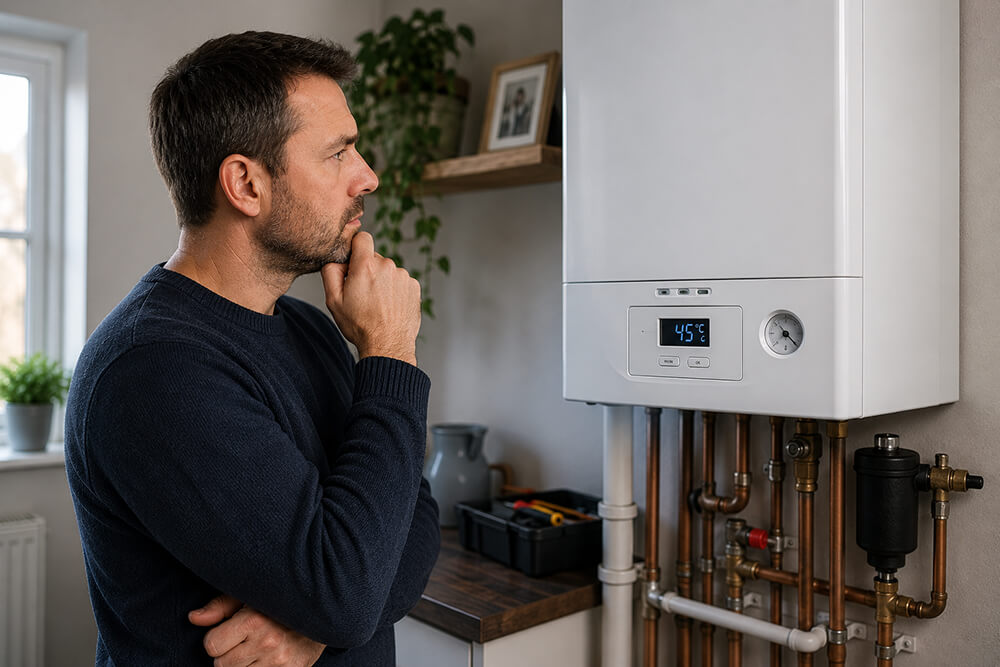
Is it normal for a boiler to take a while to heat up?
A short delay can be normal, especially during colder weather. But if your radiators stay lukewarm for too long, or your home takes much longer to warm up than it used to, it is worth looking into.
Most modern boilers should respond fairly quickly. If yours feels sluggish every day, there is usually a reason behind it.
Common reasons your boiler is slow to heat up
1. Air trapped in the radiators
If your radiators are warm at the bottom but cold at the top, trapped air could be stopping heat from circulating properly. This often makes rooms feel slow to warm and can affect overall comfort across the house.
2. Low boiler pressure
Low pressure can make it harder for hot water to move around your heating system. That often means radiators do not heat fully or take much longer than normal.
If the pressure keeps dropping, it may point to a bigger issue that needs boiler repairs rather than a quick adjustment.
If you want a related read, see what should i do if my boiler is leaking water? because ongoing pressure loss can sometimes be linked to leaks.
3. Sludge or debris in the system
Older heating systems can collect sludge, rust, and debris over time. This build-up can block the flow of hot water and cause cold spots in radiators.
When that happens, the boiler has to work harder and the heating may feel slow and uneven.
4. Radiators need balancing
Sometimes the boiler is doing its job, but the heat is not being shared properly around the home. One radiator may get hot quickly while another stay cool for much longer.
That is often a sign the system needs balancing.
5. Heating controls are not set well
The issue may come down to settings rather than a fault. If the thermostat, timer, or radiator valves are not adjusted well, your home may take longer to reach the temperature you want.
This is always worth checking before assuming the boiler itself is failing.
It can also help to review the difference between boiler servicing vs boiler repair? if you are not sure whether the issue sounds like maintenance or an actual repair job.
6. Boiler flow temperature is set too low
Some boilers are set to run at a lower flow temperature to improve efficiency. That can be useful, but it may also mean radiators do not feel as hot and rooms take longer to warm up.
If your home feels comfortable after a little longer, this may not be a fault. If not, it may need adjustment.
7. The boiler may be ageing or struggling
As boilers get older, they can become less responsive and less efficient. If your heating is slower than it used to be and other faults are starting to show, the system may be reaching the point where repairs become more frequent.
That is often when homeowners start comparing boiler Repair with boiler installations.
If replacement is being discussed, this guide may help: how many hours does it take to install a boiler?
What should you check first?
Before arranging an engineer visit, there are a few basic things you can look at:
- Check the thermostat and timer settings
- Look at the pressure gauge
- Notice whether all radiators are heating evenly
- Check for cold spots, strange noises, or repeated pressure loss
These simple checks can help you understand whether the problem is minor or whether it is time to book a boiler service.
When should you call a professional?
If your boiler stays slow after basic checks, or if the issue keeps returning, it is best to get professional advice. Gas appliances should be worked on by a qualified Gas Safe registered engineer.
A proper inspection can show whether the system needs maintenance, a part replacement, or a full Boiler Repair.
You should also act quickly if your boiler is making unusual noises, leaking, losing pressure often, or not heating the home properly at all.
Could it mean you need a new boiler?
Not always. In many cases, a slow-heating boiler simply needs servicing or targeted repair work. But if the boiler is older, unreliable, and becoming expensive to fix, it may be time to think about boiler installations instead.
A new system can offer faster heat-up times, better efficiency, and more reliable performance, especially if your current boiler is no longer suited to the property.
Conclusion
A boiler that takes too long to heat up is usually a sign that something needs attention. It could be a small issue like trapped air or pressure loss, or it could be a sign that the system is wearing out.
If you want trusted help with boiler service, boiler repair, or boiler installations, East Goscote Plumbers offers experienced support backed by 50 years in the trade. Get in touch to discuss the right next step for your heating system.