 0116 264 5115
 Looking for electrical work? Find Out More
How to Maintain Your Hot Water Cylinder for Long-Term Efficiency?
Looking after your cylinder properly can make a real difference to performance, running costs, and reliability. Regular hot water cylinder maintenance helps spot wear early, keeps safety components working as they should, and can reduce the risk of avoidable breakdowns. In England, hot water systems must meet the standards in Approved Document G, which covers hot water safety and system requirements.
A hot water cylinder often gets ignored until hot water starts running out too quickly, recovery slows down, or a leak appears. That is usually when a small issue has already had time to grow. Manufacturers including Heatrae Sadia and Gledhill both say annual servicing is important for safety, reliability, and, in many cases, warranty compliance.
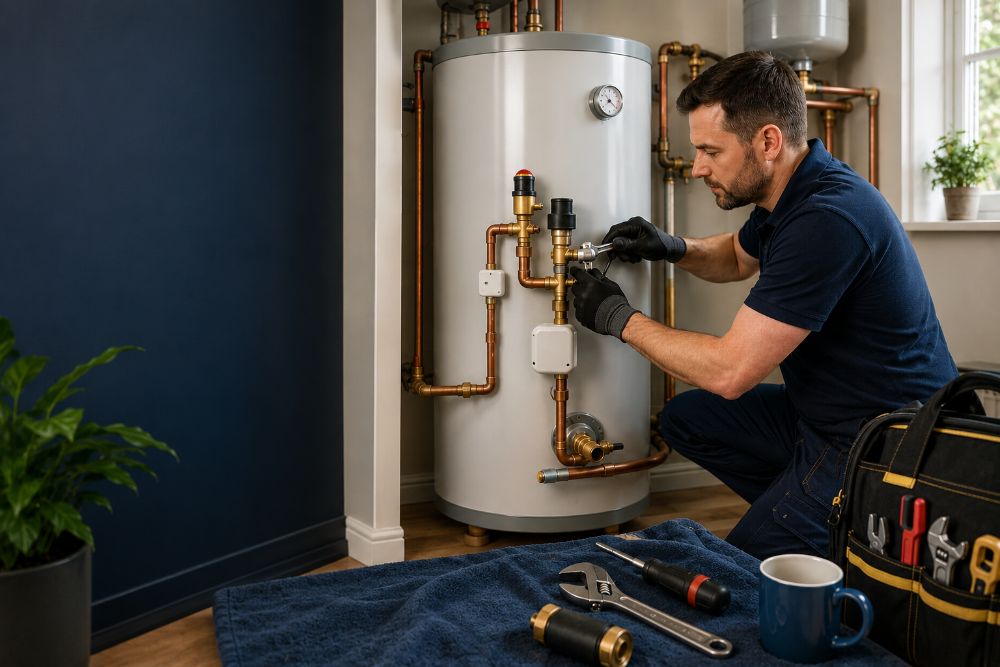
Start with an annual professional check
For many homes, the most practical step is an annual inspection. This helps confirm that the cylinder is operating safely and that important parts such as temperature controls, pressure controls, and relief valves are still working properly. Heatrae Sadia says annual servicing is essential to keep a hot water cylinder working reliably and safely, and Gledhill says unvented cylinders require an annual inspection.
That kind of visit is more than a quick glance. It is a chance to catch issues before they turn into a larger hot water cylinder repair job.
Watch for early signs of wear
A cylinder rarely fails without warning. Common signs of trouble include reduced hot water, longer reheating times, unusual noises, leaks, or staining around the unit.
If you are not sure whether age is becoming part of the problem, How Long Does a Hot Water Cylinder Typically Last? is a useful place to continue reading. As a general guide, manufacturer guidance and trade sources commonly put lifespan in the region of 10 to 20 years, depending on water conditions, quality, and upkeep.
Do not ignore pressure and safety components
This matters especially for unvented cylinders. These are pressurised systems, so the safety controls are a major part of keeping the unit safe and efficient.
Approved Document G covers hot water safety in England, and supporting guidance makes clear that hot water systems must be capable of resisting the effects of temperature and pressure. The government’s Part G FAQ also says the safety regime extends to all types of hot water system, not just unvented ones.
If valves, thermostats, or pressure controls are not working properly, efficiency can drop and safety risks can rise.
Check for heat loss around the cylinder
A cylinder should store heat effectively. If the cupboard feels excessively warm, or hot water seems to cool too quickly, heat may be escaping faster than it should.
That does not always mean the cylinder itself is failing. In some homes, older insulation, poor siting, or aged components can all affect how efficiently stored water stays hot. Over time, those issues may push a homeowner towards hot water cylinder service work or a wider upgrade plan.
Keep the surrounding area accessible and dry
A cylinder should not be boxed in so tightly that inspection becomes difficult. Keeping the area around it clear makes it easier to spot drips, corrosion, staining, or discharge from relief pipework.
It also helps a professional inspect the installation properly. Heatrae Sadia notes that servicing includes inspection and testing of key internal components, which is much easier when the cylinder and connected parts are accessible.
Be careful with DIY adjustments
Homeowners can keep an eye out for visible issues, but they should be cautious about altering settings or dismantling components. This is particularly important where unvented systems are involved.
Competent person scheme guidance from GOV.UK covers self-certification for certain building work, and industry guidance around unvented systems stresses that installation, commissioning, servicing, and repair should be handled by properly competent people. Heatrae Sadia’s installation manual also says systems must be installed, commissioned, and serviced in line with manufacturer instructions and Building Regulations.
That is one reason hot water cylinder installation should always be approached as specialist work rather than a casual DIY task.
Think about efficiency, not just faults
Long-term efficiency is not only about avoiding breakdowns. It is also about making sure the cylinder is still suited to the home and running as intended.
If the cylinder is older, slow to recover, or showing repeated faults, repair may no longer be the most cost-effective route. In that case, servicing can help clarify whether the better long-term answer is continued maintenance or a planned upgrade.
When should you arrange help?
You should arrange professional help if you notice leaks, unusual sounds, inconsistent hot water, visible corrosion, or signs that the unit is losing heat too quickly.
You should also get advice if the cylinder has not been checked for a long time. Annual servicing is widely recommended by manufacturers, especially for unvented systems, because it helps maintain safe operation and can protect warranty cover.
Conclusion
Regular maintenance helps a hot water cylinder stay safer, work more efficiently, and last longer. Small checks and timely servicing can prevent bigger faults, reduce wasted heat, and give you a clearer idea of when repair is still sensible and when a longer-term upgrade may be the smarter choice.
If your system is due for attention, East Goscote Plumbers offers experienced support backed by 50 years in the trade. Get in touch the team today to arrange a professional inspection and get expert help with the next step for your hot water system.